Cooler nights are on the way in El Paso and Las Cruces, and soon it’ll be time to turn the heat back on. Before you do, give your furnace a little attention. The easiest, cheapest, and most important step is to change your air filter. This guide covers why filter changes matter, how often to change your filter in the desert Southwest, which filter to buy, and the furnace maintenance tips that keep your heating system running safely and efficiently all winter.
Key Takeaways
• Change standard 1-inch air filters every 1–3 months, and monthly in dusty or windy weather or if you have pets.
• A clogged filter raises energy bills, strains your furnace, and lowers indoor air quality.
• MERV 8–11 filters work well for most homes.
• Test your furnace, thermostat, and carbon monoxide detectors before the first cold night.
• Schedule a professional furnace tune-up every fall.
Why Changing Your Air Filter Is So Important
Your HVAC air filter traps dust, pet hair, pollen, and other airborne particles before they circulate through your home and your heating system. In the Chihuahuan Desert, our dry climate and frequent wind and dust storms push a surprising amount of fine dust indoors, so filters in El Paso and Las Cruces homes often clog faster than you might expect. A dirty air filter can lead to:
- Higher energy bills: A clogged filter restricts airflow, so your furnace runs longer and uses more gas or electricity to heat your home.
- Uneven heating: Weak airflow can leave bedrooms and far-away rooms chilly while others stay warm.
- Furnace overheating and breakdowns: Without enough airflow, heat builds up inside the furnace. Many systems will trip a safety switch and shut off, and repeated overheating can damage components like the heat exchanger and blower motor.
- Poorer indoor air quality: A full filter can’t capture new dust and allergens, so they keep circulating, which is bad news for allergy and asthma sufferers.
- A dustier home: More dust gets past the filter and settles on furniture, floors, and inside your ductwork.
How Often Should You Change Your Air Filter?
How often you should change your furnace filter depends on the filter type and your household. Use this chart as a starting point:
| Filter Type / Situation | How Often to Replace |
|---|---|
| Standard 1-inch pleated filter | Every 1–3 months |
| Homes with pets, allergies, or asthma | Every month |
| After a dust storm or very windy stretch | Check it right away |
| During home renovation or nearby construction | Every 2–4 weeks |
| Thick 4–5 inch media filter | Every 6–12 months (follow manufacturer guidance) |
| Vacation home or rarely occupied home | Every 6 months |
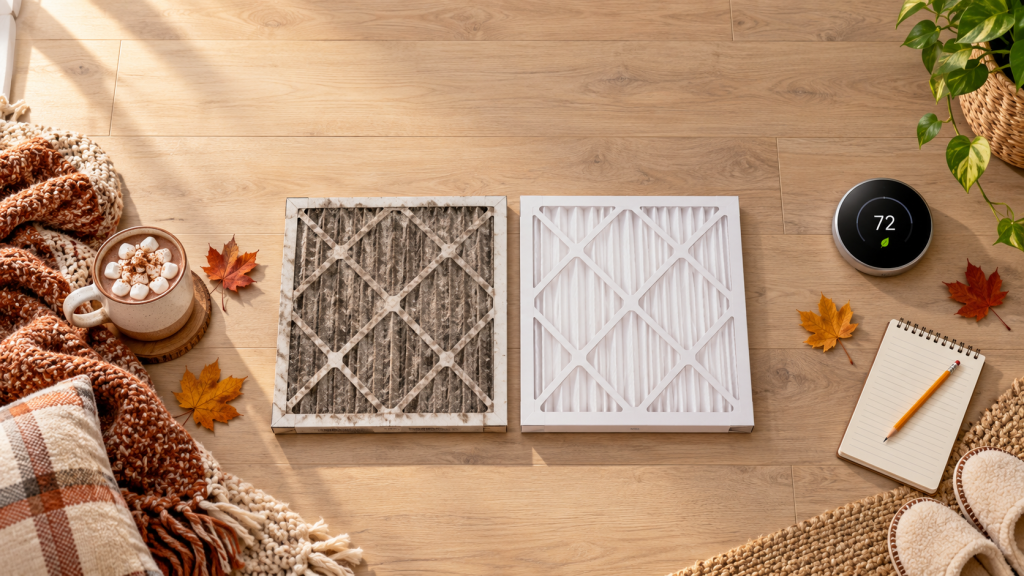
Not sure if it’s time? Pull the filter out and hold it up to a light. If you can’t easily see light through it, or it looks gray and caked with dust, replace it.
Pro tip: Write the install date on the edge of the new filter with a marker, and set a recurring reminder on your phone. Buying filters in multi-packs saves money and makes sure you always have one on hand.
Which Air Filter Should You Buy? Understanding MERV Ratings
Air filters are rated using the MERV (Minimum Efficiency Reporting Value) scale. A higher MERV rating captures smaller particles, but very high-MERV filters can restrict airflow in some residential systems.
- MERV 1–4: Basic fiberglass filters. Inexpensive, but they mainly protect equipment and do little for air quality.
- MERV 8–11: The sweet spot for most homes. Captures dust, pollen, pet dander, and mold spores without choking airflow.
- MERV 13: Captures even finer particles, including some smoke and bacteria. Great for allergy sufferers, but check with an HVAC professional first to make sure your system can handle it.
Always buy the exact size printed on the edge of your current filter (for example, 16x25x1 or 20x20x1). A filter that’s too small lets dirty air slip around the edges.
How to Change Your Furnace Air Filter in 5 Easy Steps
- Turn off your system at the thermostat.
- Find the filter. In most homes it’s behind a return air grille on a wall or ceiling, or in a slot on or near the furnace. Some homes have more than one return, so check them all.
- Remove the old filter and note its size and the direction of the airflow arrow.
- Insert the new filter with the arrow pointing toward the furnace, in the direction the air flows. Make sure it fits snugly.
- Close the grille or cover and turn your system back on.
8 Furnace Maintenance Tips to Keep Your Heat Running All Winter
1. Test Your Furnace Before It Gets Cold
Don’t wait for the first freezing night to discover a problem. Switch your thermostat to Heat and raise the temperature a few degrees above room temperature. You should feel warm air within a few minutes. A slight burning-dust smell the first time you run the heat each season is normal and should fade quickly. If the smell lingers or smells like burning plastic or electrical wiring, turn the system off and call a professional.
2. Check and Update Your Thermostat
- Replace thermostat batteries if your model uses them. Weak batteries are a common cause of “my heat won’t turn on” calls.
- Make sure it’s set to Heat and the fan is set to Auto.
- Program a schedule. Lowering the temperature 7–10°F while you’re asleep or away can noticeably reduce heating costs.
- Consider upgrading to a smart thermostat for remote control and energy reports.
3. Keep Supply Vents and Return Grilles Clear
Walk through your home and make sure furniture, rugs, curtains, and storage boxes aren’t blocking vents or returns. Keep vents open in every room, even rooms you don’t use; closing too many vents can increase pressure in your system and reduce efficiency. Vacuum vent covers and return grilles to remove built-up dust.
4. Give Your Furnace Some Breathing Room
Keep at least three feet of clear space around your furnace and water heater. Never store paint, gasoline, cleaning chemicals, aerosol cans, or other flammable items nearby. If your furnace is in the garage or attic, make sure the access path is clear for you and for service technicians.
5. Test Smoke and Carbon Monoxide Detectors
Gas furnaces can produce carbon monoxide (CO), an odorless, colorless gas, if something goes wrong. Press the test button on every smoke and CO detector, replace batteries, and replace any detector past its expiration date (usually 7–10 years). Make sure you have a CO detector on every level of your home and outside sleeping areas.
6. Check Outdoor Vents and Flue Pipes
If your furnace vents outside, make sure the exhaust and intake pipes aren’t blocked by tumbleweeds, windblown debris, bird nests, or landscaping. Blocked vents can cause your furnace to shut down or, worse, push exhaust back into your home.
7. Know the Warning Signs of Furnace Trouble
Call a licensed HVAC technician if you notice any of these:
- Banging, rattling, squealing, or grinding noises
- The furnace turns on and off frequently (short-cycling)
- Cold or lukewarm air blowing when the heat is on
- A yellow or flickering burner flame instead of a steady blue one
- Soot, excess dust, or moisture around the furnace
- A sudden spike in your gas or electric bill
- Headaches, dizziness, or nausea among household members when the heat is running (a possible sign of carbon monoxide; get everyone outside and call 911)
If you smell gas (a rotten-egg odor), don’t flip light switches or use your phone inside. Leave your home immediately and call your gas company or 911 from a safe location.
8. Schedule an Annual Furnace Tune-Up
A yearly inspection by a licensed HVAC professional is the best way to catch small problems before they turn into expensive emergency repairs. A typical tune-up includes cleaning burners, inspecting the heat exchanger, checking electrical connections, testing safety controls, and checking for gas leaks. Fall is the perfect time to schedule one, before technicians get busy with winter service calls. Some manufacturers also require regular maintenance to keep the equipment warranty valid, so check your paperwork.
Troubleshooting: What to Check Before You Call for Service
If your heat isn’t working, these quick checks may save you a service call:
- Is the thermostat set to Heat and set higher than the current room temperature?
- Are the thermostat batteries fresh?
- Is the air filter clean? A clogged filter can trigger a safety shutoff.
- Has the furnace breaker tripped in your electrical panel?
- Is the furnace power switch (it often looks like a light switch near the unit) turned on?
- Is the furnace access panel closed securely? Many furnaces won’t run if the door safety switch isn’t engaged.
If you’ve checked all of these and the furnace still won’t run, it’s time to call a professional.
Your Fall Furnace Maintenance Checklist
- ☐ Replace the air filter (and buy spares)
- ☐ Test the heat before the first cold night
- ☐ Replace thermostat batteries and set a heating schedule
- ☐ Clear vents, returns, and the area around the furnace
- ☐ Check outdoor vent pipes for debris
- ☐ Test smoke and carbon monoxide detectors
- ☐ Schedule a professional furnace tune-up
Frequently Asked Questions
What happens if I never change my air filter?
Over time, a clogged filter restricts airflow, causing your furnace to overheat, run longer, and wear out sooner. You’ll likely see higher utility bills, dustier rooms, and more frequent breakdowns. In severe cases, overheating can contribute to a cracked heat exchanger, which is an expensive repair and a potential carbon monoxide risk.
Can a dirty air filter stop my furnace from working?
Yes. Many modern furnaces have a high-limit safety switch that shuts the system off when it overheats from poor airflow. If your furnace keeps turning off, a dirty filter is one of the first things to check.
Which way does the arrow go on an air filter?
The arrow should point toward the furnace or air handler, in the direction air flows through the system. For a filter in a wall or ceiling return grille, the arrow points into the wall or ceiling, away from the room.
Is a higher MERV rating always better?
Not always. MERV 8–11 filters offer a great balance of air quality and airflow for most homes. Very high-MERV filters can restrict airflow in some systems, so check with an HVAC professional before going above MERV 13.
How often should a furnace be professionally serviced?
Once a year, ideally in early fall before heating season begins. Annual service improves efficiency, extends your furnace’s lifespan, and helps catch safety issues early.
Do my furnace and air conditioner use the same air filter?
In most homes, yes. The furnace and air conditioner usually share the same blower and air filter, so changing your filter regularly helps your system all year long, not just in winter.
More Seasonal Home Tips from Edwards Homes
Getting your home ready for cooler weather? Check out these related guides:
- Stay Safe and Cozy: Tips for Handling Cold Weather in El Paso and Las Cruces
- Prepare Outdoor Plumbing for Winter: Expert Tips
- Freeze Warning in El Paso: Protect Your Home!
- El Paso Windy Season: How to Protect and Prepare Your Home
Stay Warm and Breathe Easy This Winter
A five-minute filter change and a few simple checks can lower your energy bills, extend the life of your furnace, and keep your family safe and comfortable all season. Grab a new filter, mark your calendar, and get your home ready for cooler weather. From all of us at Edwards Homes, stay warm and cozy this winter!